Secrecy policy for the assassination investigation
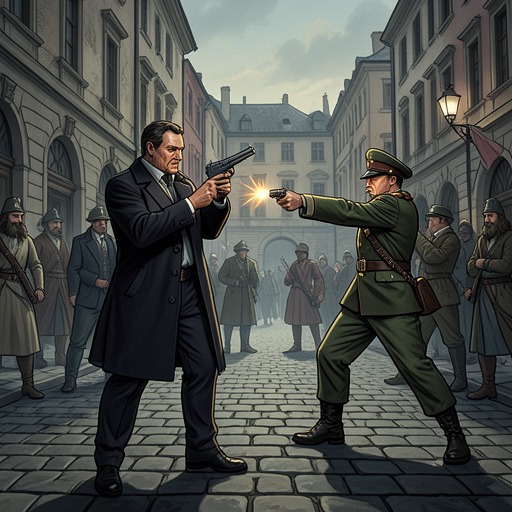
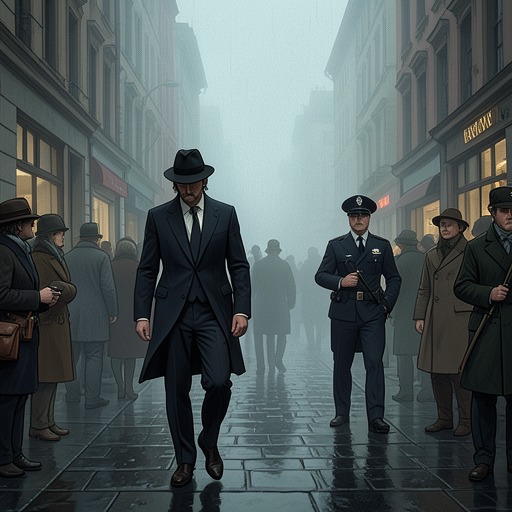
The Day of the JackalThe secrecy policy for the assassination investigation governed not only what the French authorities could tell the public, but how they could search for The Jackal. Charles de Gaulle ordered the threat kept within a small circle and rejected measures that might make it seem he was hiding from a foreign assassin. The resulting investigation had enormous institutional resources but could not use them openly: its progress depended on discreet coordination, while the need for secrecy also imposed delays and gave the suspect room to move.
Origins and Political Purpose
The policy took shape when officials were still assessing the account in the Rolland report, based on the statements of Viktor Kowalski, who had since died. The Minister of the Interior told Alexandre Sanguinetti that the account had not yet been independently confirmed and that inquiries in Vienna were continuing. In those circumstances, a nationwide search for a foreigner known only by a codename was judged premature as well as politically dangerous.
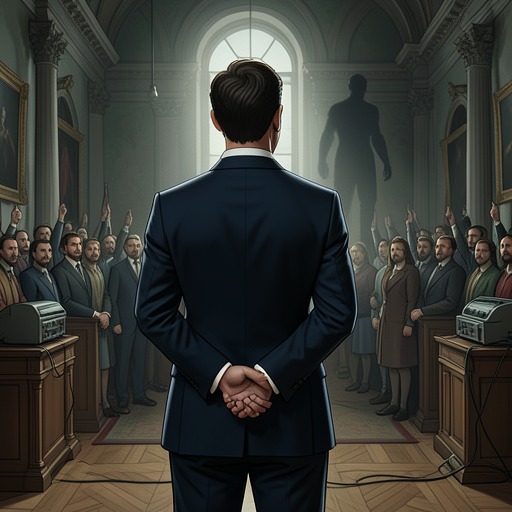
The President’s instructions went further than caution about an unverified lead. There was to be no publicity, no nationwide search, and no indication beyond a small circle that anything was wrong. The stated concern was that disclosure would give the press a sensational story, invite ridicule from other countries, and make additional security measures look like a public spectacle of Charles de Gaulle hiding from a single foreigner. The President was described as adamant that even a general impression of the affair becoming public would have consequences for those responsible.
The policy protected the authority and public image of the presidency, but it also set the terms of the police response. The threat was treated as serious enough to demand extraordinary investigative powers, yet those powers could not initially be exercised through a conspicuous national alert. The tension was already apparent in Alexandre Sanguinetti’s frustration: he believed the authorities knew who they were pursuing, but was told they could not simply take countermeasures or alter the President’s public appearances.
A Secret Investigation with Extensive Resources
Claude Lebel received the assignment as a directive after a fifty-minute briefing, not as a request for advice. He was granted access to the information and resources of the agencies represented at the meeting, with no limit specified on costs. That broad authority did not mean the operation could be run publicly. Lebel’s first administrative instructions were designed to keep the investigation contained: his ordinary secretary was to be transferred or placed on leave, Lucien Caron was to become his sole assistant, and Caron was to be authorized to request on Lebel’s behalf whatever the participating departments could provide.
The private office was equipped for sustained work, with a camp bed, washing and shaving supplies, coffee, and ten outside telephone lines reserved for it. These arrangements make the contrast central to the policy visible: the investigation could mobilize a large apparatus behind closed doors, while access to the secret itself was sharply restricted. Lebel and Caron later spent three hours in the basement communications room contacting senior police officers abroad over secure, difficult-to-intercept lines. Lebel did not present the approach as a formal inquiry between police forces. He described it as a routine tip-off, explained that the authorities did not yet know whether a crime had been prepared, and asked whether foreign files suggested a political contract assassin with successful killings behind him. The search crossed borders, but its language and disclosure were deliberately limited.
Operational Consequences and Constraints
The secrecy rule shaped the pursuit of Alexander James Quentin Duggan, one of The Jackal’s identities. A card found in the archives showed that Duggan entered France on the Brabant Express from Brussels on July 22 and appeared in a report among passengers on the Etoile du Nord Express travelling from Paris to Brussels on July 31. A hotel card showed a stay near the Place de la Madeleine from July 22 through July 30. Lebel chose to visit the hotel proprietor discreetly rather than order a raid; the visit confirmed that Duggan was no longer there by August 15 without waking the other guests.
When police information later connected Duggan to the Hotel du Cerf, the ordinary flow of registration cards became a critical limitation. The card was collected and sent to regional headquarters through routine channels; only there was it recognized as the registration of a wanted man. Lebel explained that the report did not reach the French Judicial Police until after The Jackal had left, giving him an hour’s start. Under the secrecy policy, the authorities could not alert every rural gendarmerie to look for a man named Duggan without risking a public uproar. Lebel also could not establish why the suspect had left the hotel early, and would not treat the timing alone as proof that he had been warned.
The response was to issue a high-priority, all-stations alert for a white Alfa Romeo, Italian registration MI-61741, rather than broadcast The Jackal’s name. The car was listed as stolen, and police were told to report it immediately but not to approach its occupant if they were alone. The alert was to be kept from the press, and Lebel specifically warned against letting the suspect learn of it through radio traffic. The car’s description was then circulated routinely across France; hotel registration cards were also sent to regional headquarters for rapid checks. When the car was found near Ussel, Lebel ordered a broad local search, from the site outward, asking officers to make discreet inquiries at farms, shops, cafes, hotels, and woodcutters’ shelters. To deflect local reporters, they were to use a car-crash explanation and present the search as a mission of mercy. If officers located the suspect, they were to surround him and hold the position rather than approach him.
These methods show how secrecy functioned as an operational rule rather than a simple ban on speaking to the press. It determined which identifiers could be circulated, how quickly information moved, what local officers could say, and how a suspected armed man should be approached. It helped preserve the investigation’s concealment, but routine reporting and the refusal to issue a fully public warning also meant that recognition could come late.
Breach, Limited Disclosure, and the Final Security Measures
Secrecy did not prevent information from reaching The Jackal. Lebel eventually argued that the suspect had been repeatedly tipped off about the investigation’s progress: one departure followed the arrest of Valmy and Lebel’s inability to impersonate Valmy on the telephone, while two earlier occasions followed briefings to the senior officials. To support the accusation, Lebel played a recording of a telephone conversation at a meeting. Colonel Saint-Clair turned ashen and his hands trembled as he gathered his papers. The episode exposed a breach within the circle that had been entrusted with the confidential operation; the policy’s vulnerability lay not only in public disclosure but in controlling information among insiders.
The restrictions changed after The Jackal killed the Baroness de la Chalonnière. Charles de Gaulle still refused to alter any item on his future itinerary to protect himself. The Minister nevertheless obtained permission to lift the publicity ban in a limited respect: the authorities could tell the press that The Jackal was wanted for the murder and was believed to have fled to Paris. Once investigators narrowed his new assumed identity to one or several possibilities, they could release those names; a photograph of a tourist who had lost a passport in London could follow. This was a controlled public appeal, not an abandonment of discretion.
As the Liberation Day ceremonies approached, the policy’s central conflict remained. Lebel described the security arrangements: steel barriers, searches of the enclosed areas and sewers, searches of nearby buildings, armed observers on rooftops, and police placed on and within the towers and roof spaces of Notre-Dame de Paris. Participants, including priests, choirboys, police, and CRS personnel, were to be checked or specially identified; bullet-proof windows were secretly fitted to the President’s car, without even informing Charles de Gaulle, who was expected to be furious. Yet Lebel could not know how The Jackal intended to evade the precautions. His conclusion was that the suspect remained armed, in hiding, and possibly under yet another identity, and that he would have to emerge at the ceremonies. The investigation had moved from near-total concealment to carefully bounded disclosure, while its final defense still depended on spotting a man the authorities had been ordered not to expose too soon.